How Long is a Cup of Tea?
Doing maths on chamomile; input vs output
We tend to soil, sow seeds and care for plants, invest our time and energy and then, usually, enjoy a good harvest. Fresh radishes, a few rocket leaves, a sprig of dill to complement our dinner. The satisfaction of eating from our garden.
Then comes a time when, due to the season or the number of plants we’ve grown, we have more harvest than we can use fresh. That’s where processing and preserving come in: freezing, pickling, cooking and bottling, drying and storing. These processes can be time-consuming but also hugely beneficial to the home gardener, and I believe they should definitely be part of our equation when thinking about the input-and-output relationship of food growing.
Which brings us to the harvest that inspired this blog post.
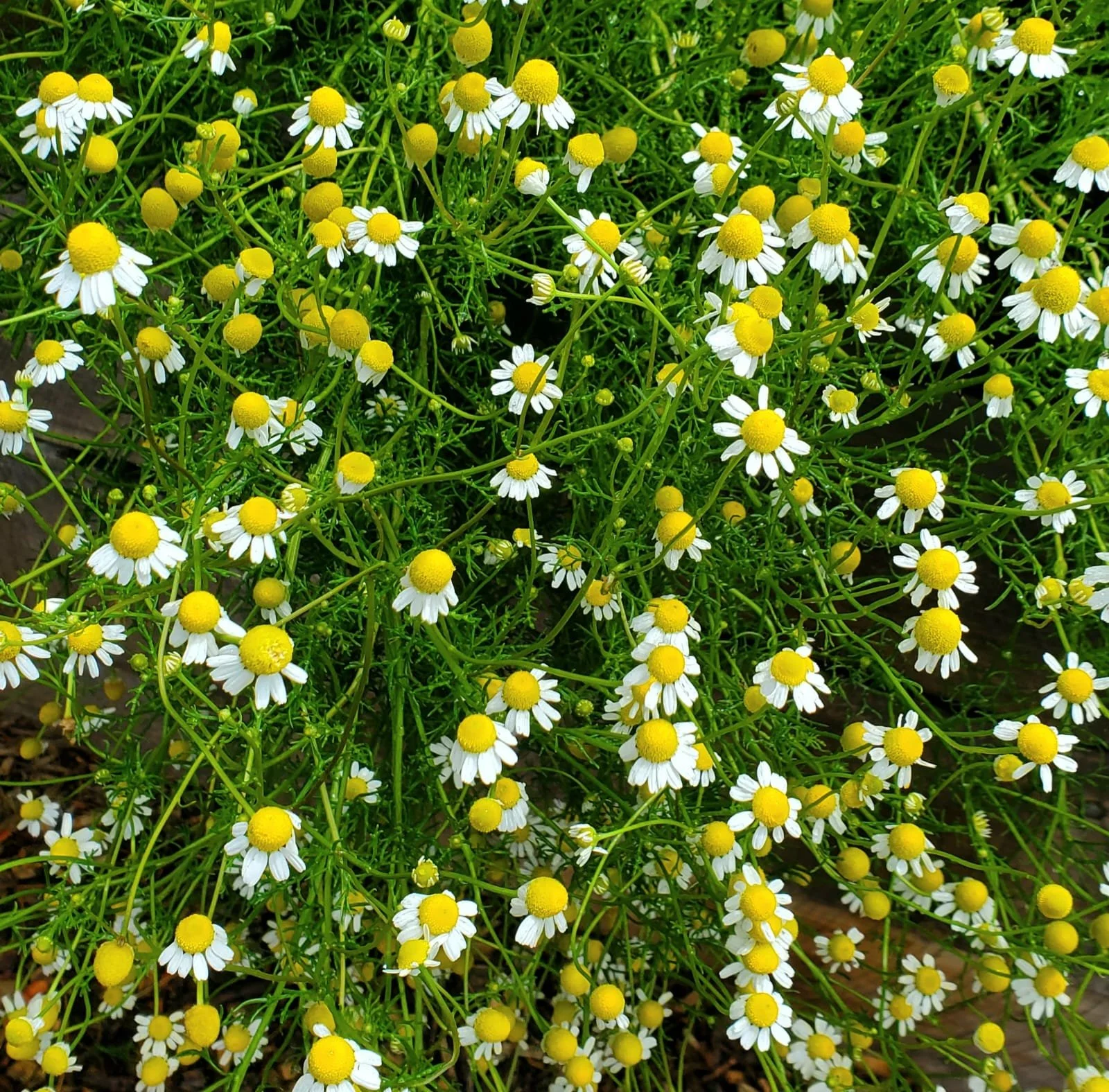
I had the luxury of access to a lush, bushy German Chamomile that was ready for a prune and a harvest. With this abundance at hand, I decided to cut a little bouquet and take it home to make my own “calm the f*#k down” tea. Consider it an urgent top up.
The maths
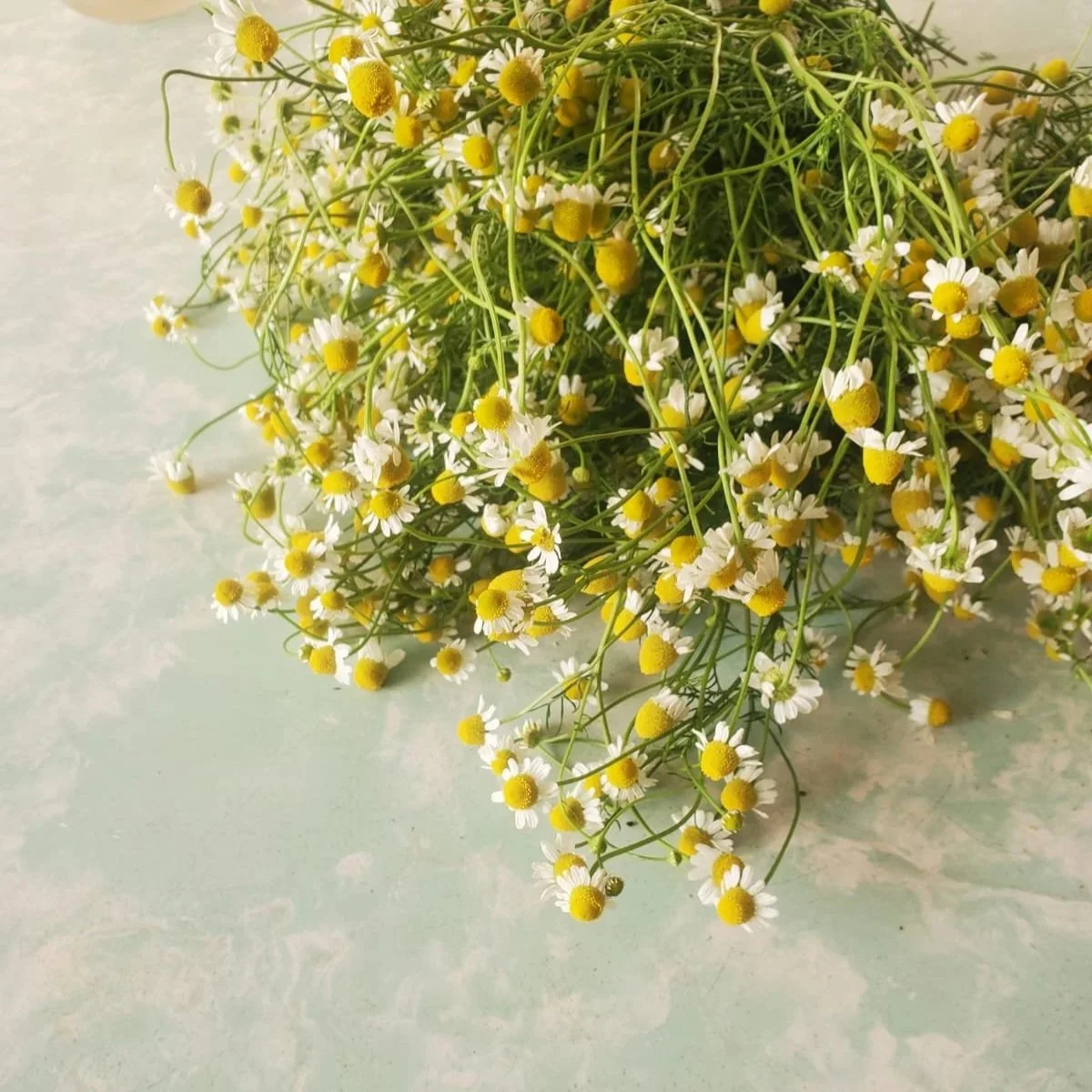
Harvesting the chamomile was a fairly quick (and definitely enjoyable) task, and probably took about 5 minutes of leisurely cutting a bouquet. If I were to harvest only the flower heads by hand, it would have taken longer. Not to worry, I paid for it later in the next step.
It took 45 minutes to separate the flowers and get rid of most of the branches.
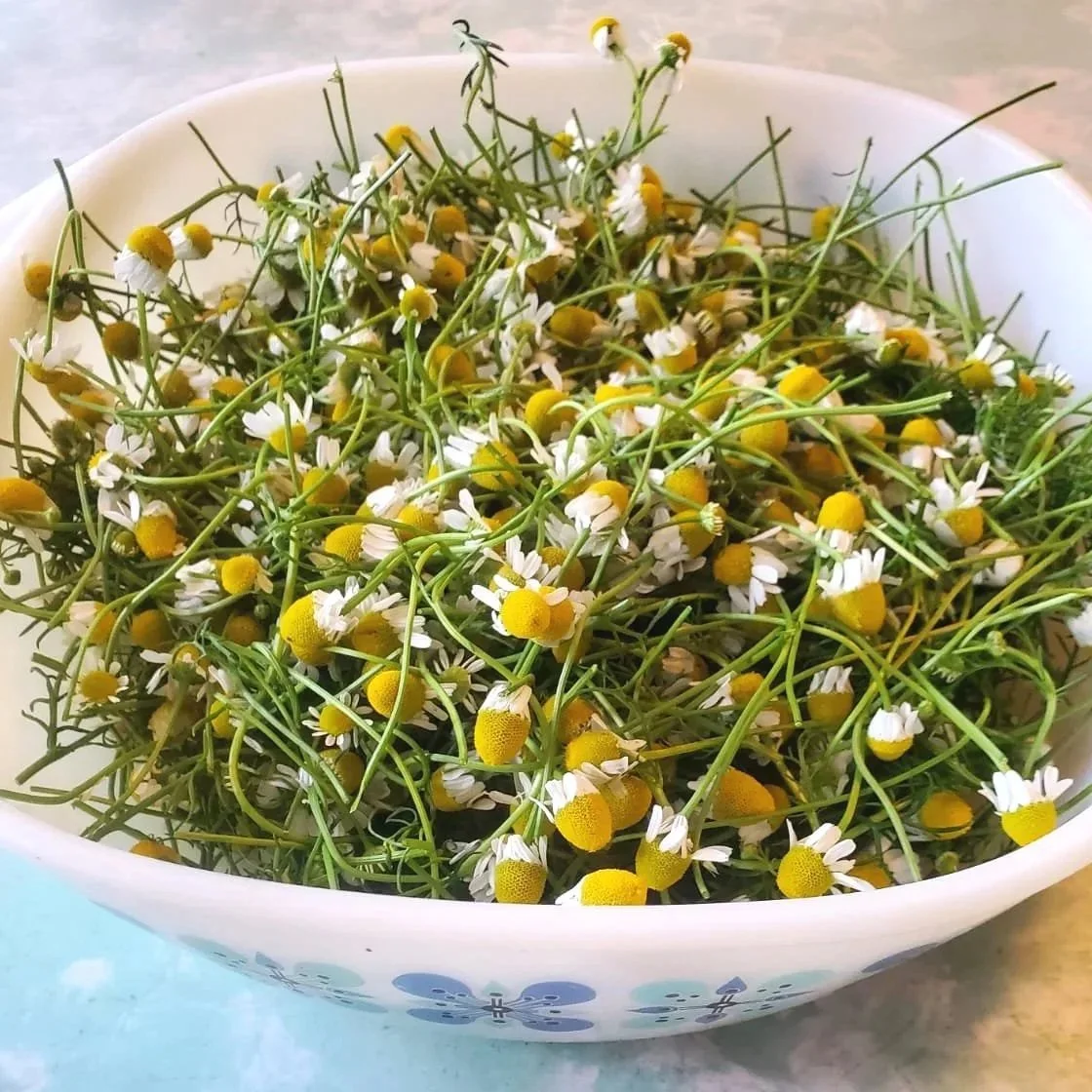
Initially I picked only the flower heads, but that was quite slow and, more importantly, the small flowers were falling between the gaps of the dehydrator mesh. I didn’t mind keeping more of the leaves and soft stems. They may not be as potent as the flower heads, but they still have oils and aroma, as well as bulk up the overall quantity of processed plant matter.
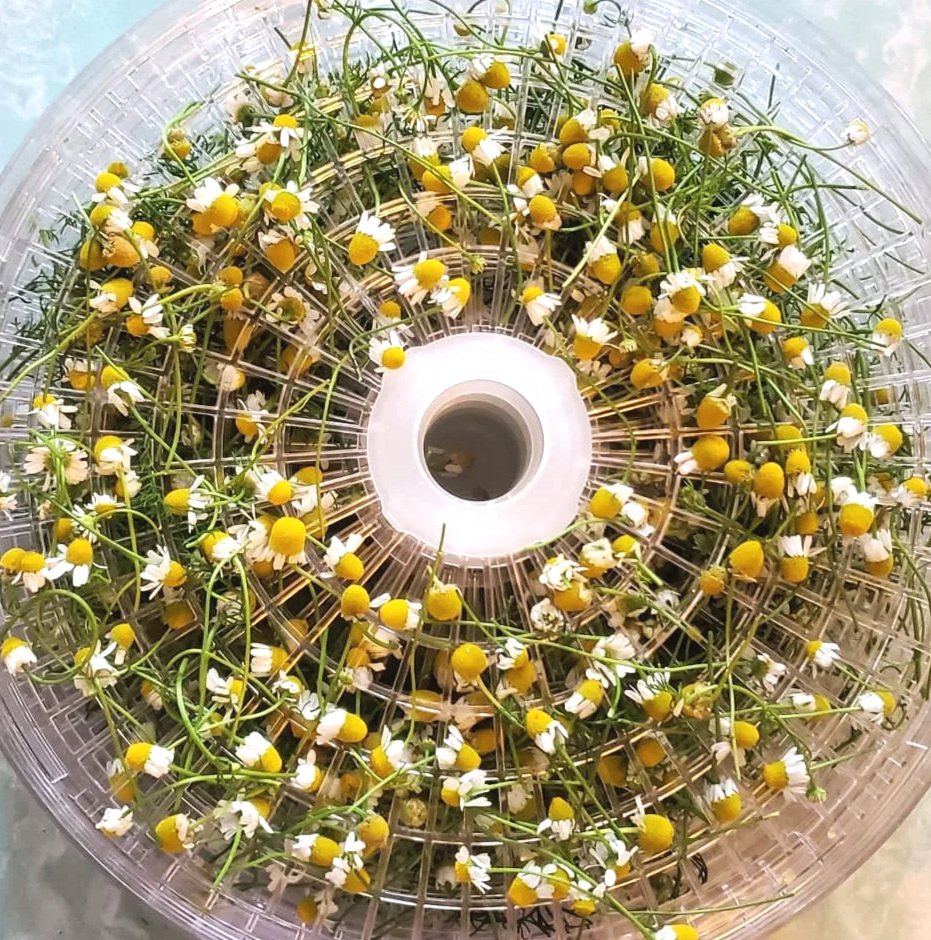
The next step was to spread everything in thin layers on the dehydrator trays and set it to 40°C. The lower temperatures help preserve the colour, oils, and medicinal properties. When processing herbs and flowers, I usually choose 40–45°C to keep those qualities intact.
Side note: A dehydrator is a lovely bonus but definitely not essential. Depending on your space and the weather, herbs and flowers can be dried in open air or on the lowest setting of most ovens.
In total, it took about 14 hours to dry.
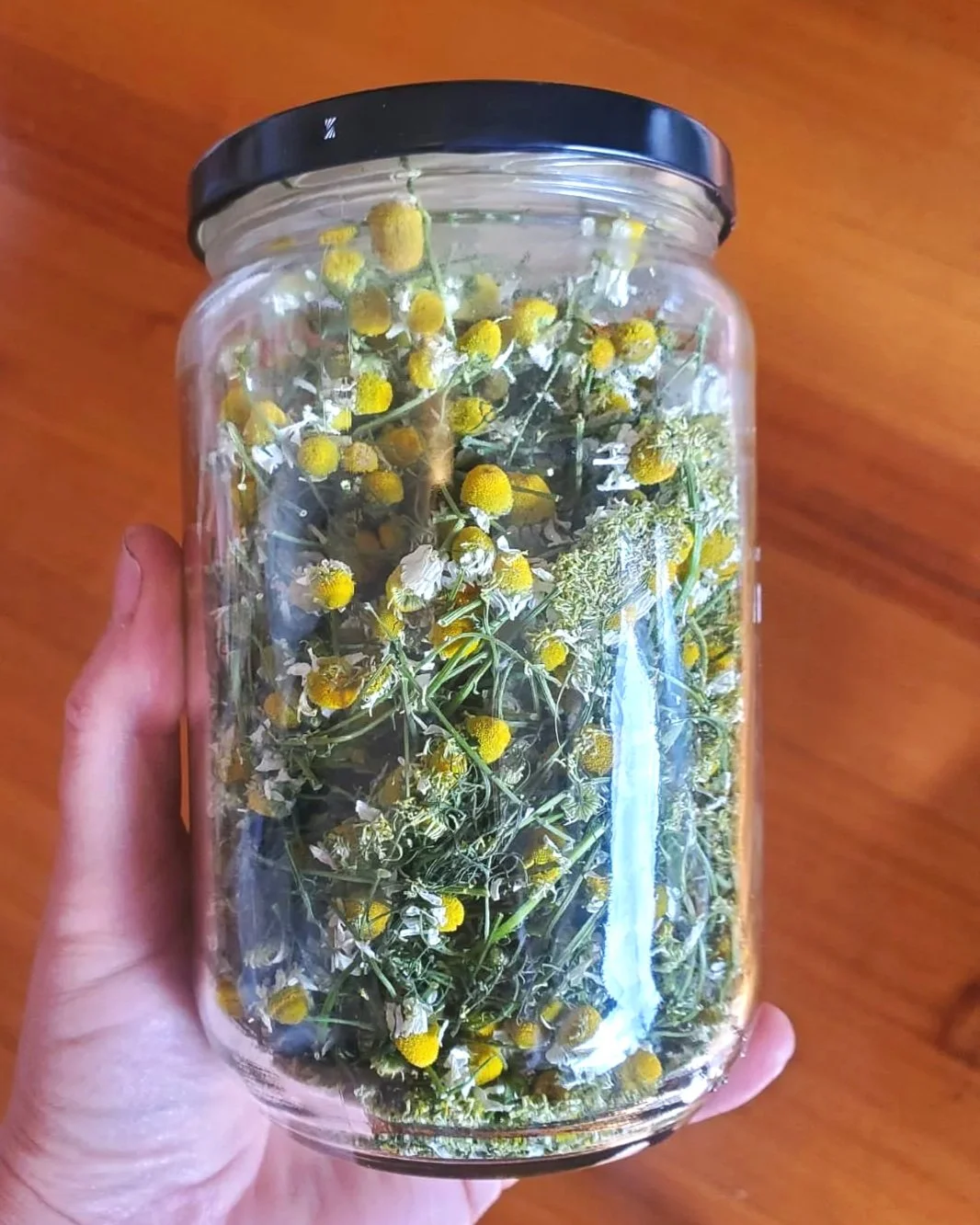
I then spent another 20 minutes gently removing everything from the dehydrator, stuffing it into a jar, and cleaning up the delightful-looking mess. I also documented the process, which probably added another 20 minutes- and yes, I’m counting that, because if making my own chamomile tea can be a source of content for my growing business, then it absolutely adds value to my bottom line.
The bottom line
In this case, my equation of input and output consists of:
A somewhat fiddly process- yes. it was time consuming, but with a good portion of it being passive, waiting time.
Lower yield- I got one jar full (including the stems), which is nice, but for all the time put in I would have liked more.
It was kinda fun- soothing, pretty to look at, and the house smelled absolutely lovely.
Bonus content- I barely had to stage this charming boho mess for a cute post. Like I said, it does factor into my equation, although I do struggle with that… so it’s both a plus and a minus.
Would I do it again?
Probably. Though I do see it being a great communal activity. Sitting around a table, picking flowers and sharing stories, drinking fresh chamomile tea, while also achieving much higher yields.
It would definitely make it an even better experience.
Would you join me in making our own “calm the f*#k down” tea?
I’ve already done the lavender flowers.