Letting It Be Easy
Gardening with “That’ll Do” Energy

I’m busy.
And so are you, right?
Most of us seem to be juggling one too many life things for our own good.
Sometimes, the mere thought of taking on a new task can make me feel overwhelmed and like my cup is this close to overflowing.
I have been managing life’s stresses in various methods over the years, often forgetting, neglecting, and restarting good wellbeing practices. Maintaining routine is hard.
Naturally, one of my favourite feel-good practices is gardening.
’But Shani, even gardening can feel overwhelming!’ you say.
I know! I used to feel it too. Standing in that little courtyard of overgrown weeds, frozen because I didn’t know where to start.
And that is why I have learned to apply the “That’ll Do” methods.
The theory behind it is simple: I do what I can, and that will do.
Is it perfect? HA! No.
Are there better ways? Likely.
Are other people’s tiny gardens looking lusher and more productive than mine? Of course! (thank you, Instagram…)
But will trying to do it “the right way” send me into a spiral of research and stress, thinking there’s no way I can accomplish such a task, that I’m so busy I can’t fit it into my schedule, leading me to despair before I even begin? Most likely.
Hence: That’ll Do.
Doing what you can is something I both practice and teach.
One achievable task at a time. It doesn’t matter if you have a small space or an entire acre, if you’re scraping by or have money to spare, if you’re doing it on your own or have a small tribe sharing the load. We all work with different resources and energies. The trick is to find the achievable goal that works for you. And then maybe the next one. And the next. Each task fueled by the success of the previous.
Introducing: my compost.
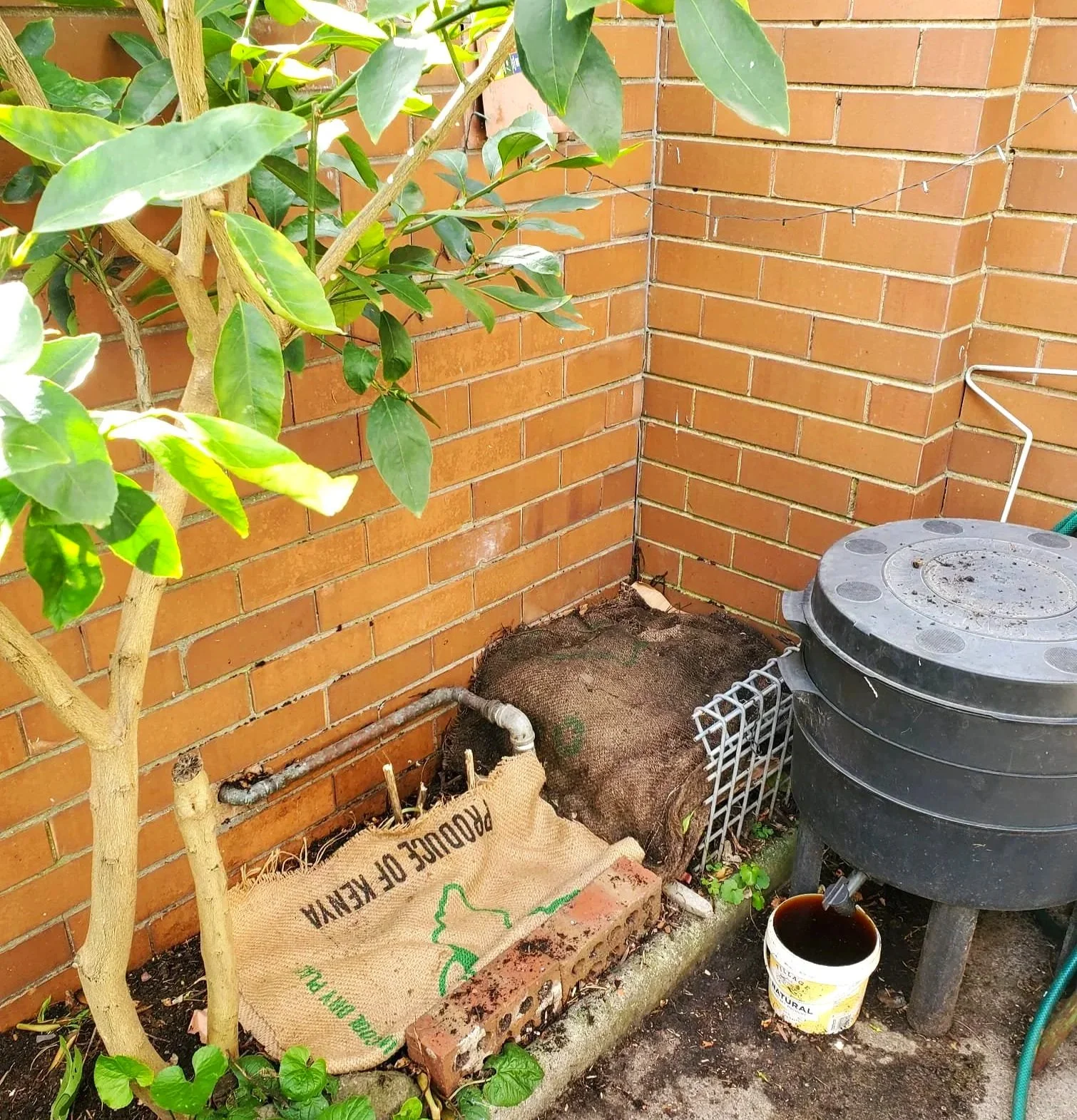
My composting practice is a good representation of That’ll Do. It has changed and evolved over time, waxing and waning with my energy levels. If you wish to start your own minimum-effort “That’ll Do” composting journey, continue reading for practical advice.
For context, I have a household of one to two people at any given time, cook 95% of my meals, and my food is predominantly vegetables. My kitchen scrap output is rather small. I also live within a council area that provides green-waste bins.
I keep two yogurt buckets on the kitchen bench (1 or 2 liter) separating scraps that can go into my worm farm and compost pile from those I avoid adding and instead send to council green waste.
The worms get the freshest and nicest of our scraps - lots of green leaves, fruit cores, and some eggshells. But they can only manage part of our waste, quantity-wise, so the rest goes into the compost pile.
Scraps I avoid adding to my compost include pasta, rice, bread, dairy, and (if we had any) meat. These take too long to break down in a small home compost and tend to attract rats.
You may already know the basics of composting- a good mix of carbon and nitrogen (browns and greens). If you don’t, let me know and I’ll expand in another post. Or join my upcoming Home Composting for Beginners workshop at CERES Brunswick.
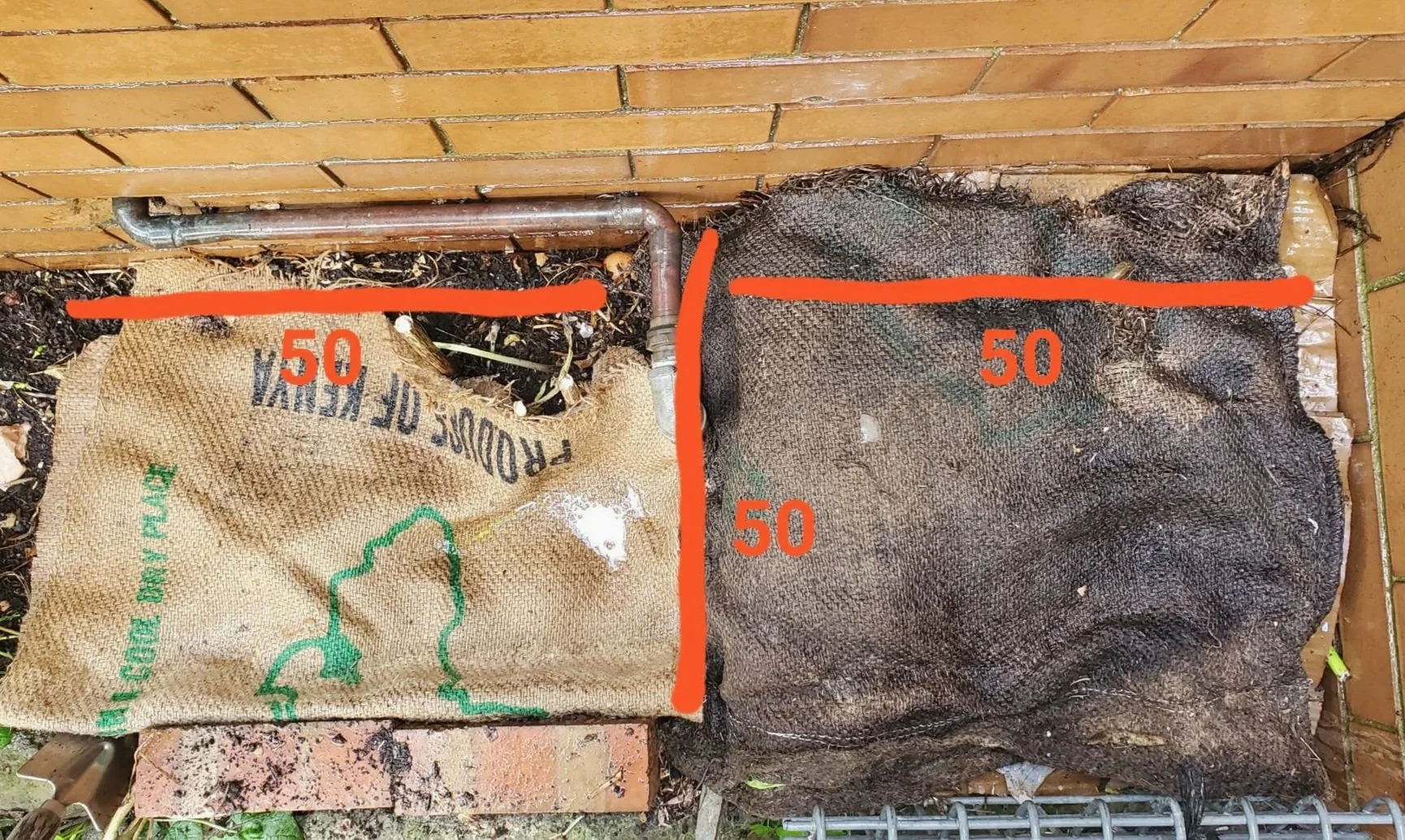
I keep two small piles in the corner of the garden bed, conveniently under the minimal-effort lemon tree from my previous post.
When the bucket fills up, I go outside, lift the hessian sack, and empty it. Often, I just cover it back up and walk away. That corner is also where I throw garden clippings and some paper and cardboard from the occasional pizza. That’s it.
The piles are mostly left to their own devices, allowing the life in the soil to do its thing. Every now and then, when my stars align and I’m feeling jazzy, I water or give them a mix.
When one pile gets to a certain height, I cover it and leave it to continue decomposing and maturing while I throw scraps into the next bay.
Yesterday, I had enough time and motivation to harvest from the maturing pile and give the newer one a nice restart by flipping it onto the now-empty bay.
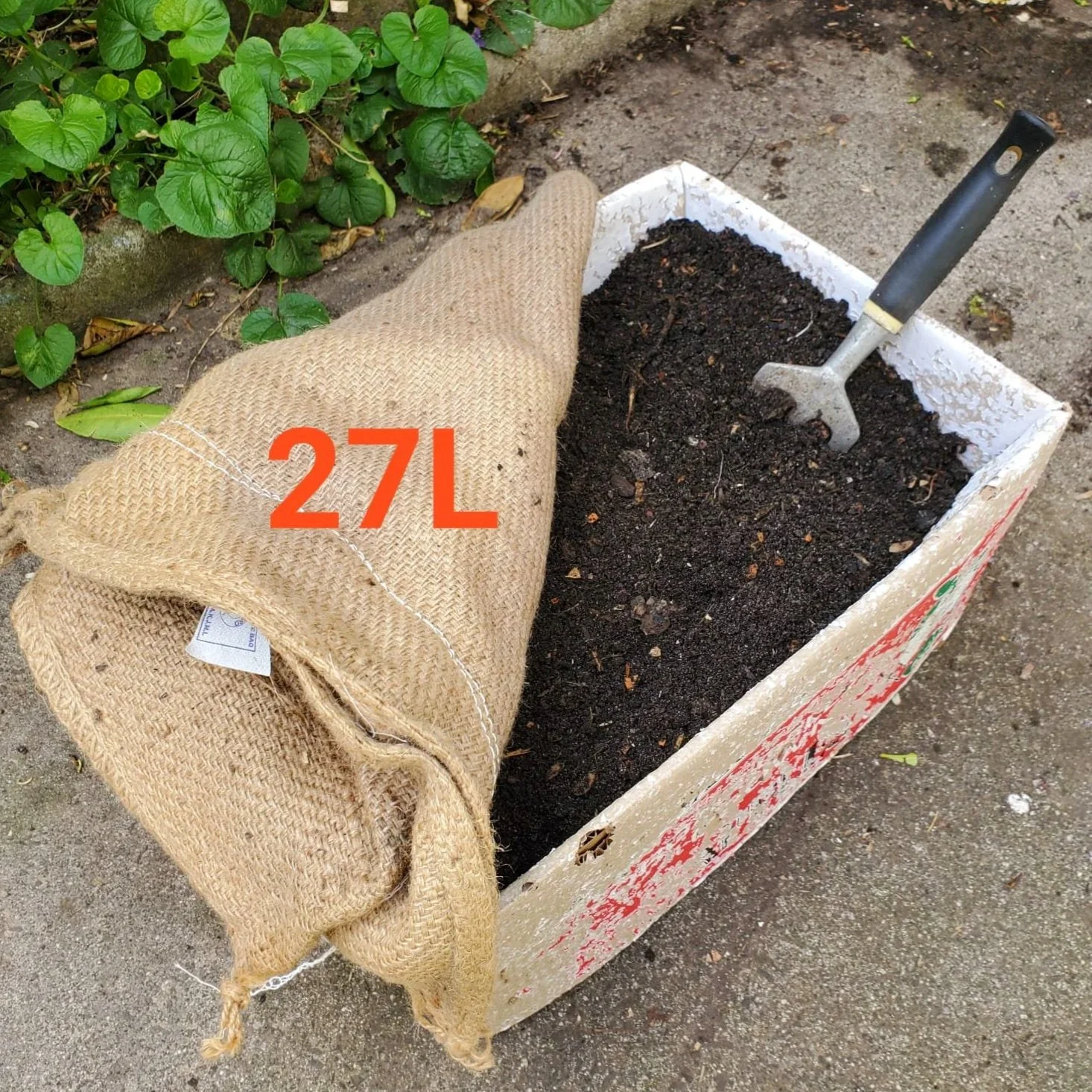
In about 30 minutes I had flipped, shoveled, and sifted (through a rigged old window frame and some found mesh) 27 litres of beautiful compost. Job done, I’m done, and the summer crop seedlings I’m buying this week (because I missed the window of growing from seed this year) will have lush, rich soil waiting for them.
That’ll do.
Do you have your own version of “That’ll Do”? Or a small system that keeps things feeling manageable and joyful? I’d love to hear how you approach gardening when life is full.